
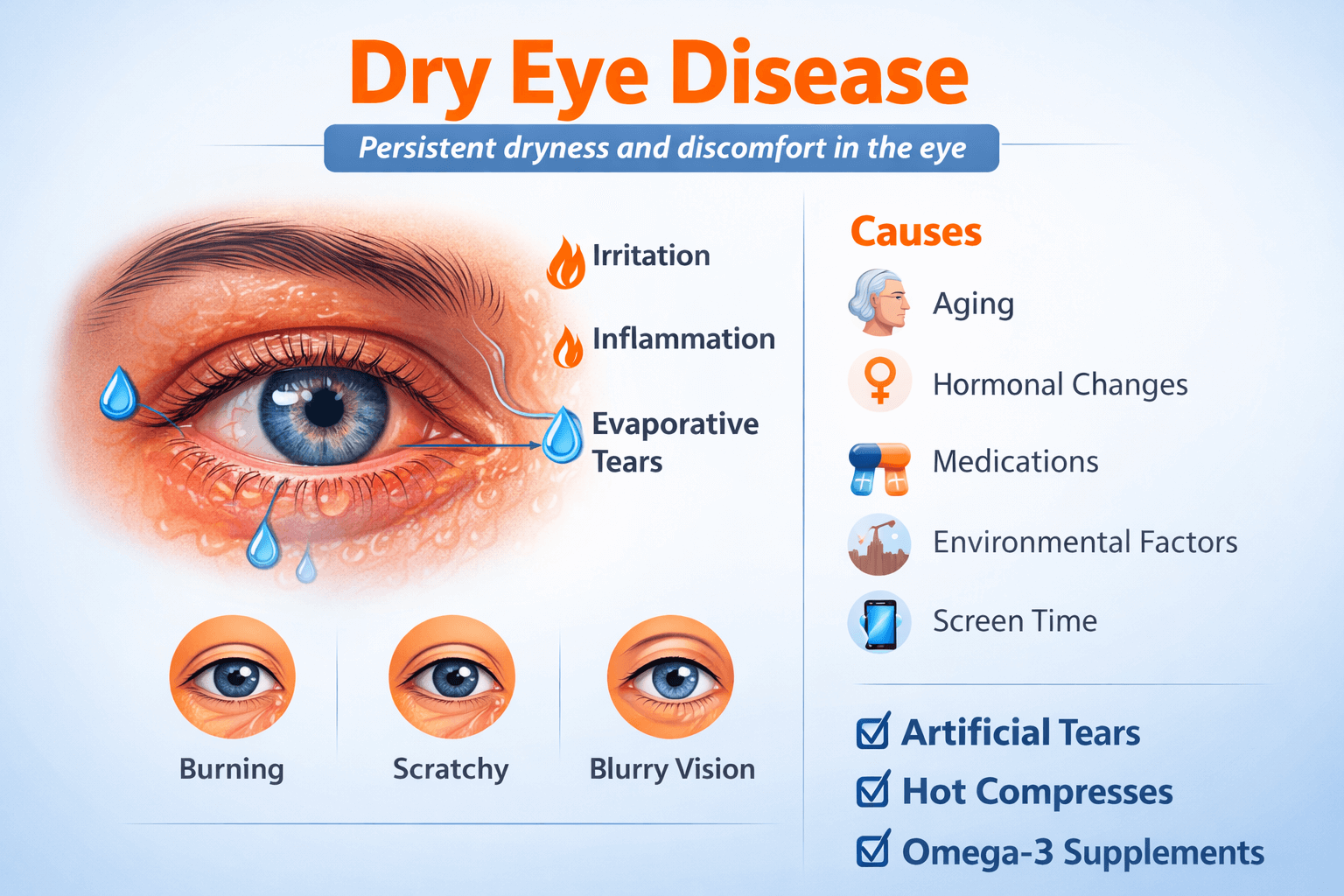
1. What is Dry Eye Disease?
Dry eye occurs when your eyes do not produce enough tears or the quality of tears is poor. This leads to irritation, redness, burning sensation, and blurry vision.
2. Common Causes of Dry Eye
- Excessive screen time (mobile, laptop, tablets)
- Low blink rate
- Long-term exposure to AC or heaters
- Age above 40 years
- Hormonal changes (especially in women)
- Autoimmune conditions
- Vitamin A deficiency
- Certain medications
- Post-LASIK dryness
- Environmental factors (dust, smoke, pollution)
3. Symptoms You Should Not Ignore
- Burning or stinging sensation
- Redness
- Watering (reflex tearing)
- Gritty or sandy feeling
- Blurred vision
- Light sensitivity
- Eye fatigue
- Difficulty wearing contact lenses
4. Types of Dry Eye
Aqueous Deficient Dry Eye
Tears are not produced in adequate quantity.
Evaporative Dry Eye
Tears evaporate too quickly due to poor oil layer (common in screen users).
Note: Many patients have mixed-type dry eye.
5. Dry Eye Treatment Options
a) Lubricating Eye Drops
Artificial tears to restore moisture.
b) Gel-based Drops & Ointments
For long-lasting relief, especially at night.
c) Anti-inflammatory Drops
For chronic or severe dry eye.
d) Punctal Plugs
Helps retain natural tears by blocking drainage channels.
e) Omega-3 Supplements
Improves tear quality.
f) Meibomian Gland Treatment
Warm compresses or advanced lid therapies.
6. Home Remedies & Lifestyle Tips
- Follow the 20-20-20 rule for screen use
- Increase water intake
- Blink consciously
- Avoid direct AC airflow
- Use humidifier if needed
- Wear protective glasses outdoors
- Maintain eyelid hygiene
- Include flaxseed, walnuts, and omega-rich foods
7. When to See an Eye Doctor?
Consult an ophthalmologist if you experience:
- Persistent burning or redness
- Severe dryness not improving with basic drops
- Blurred vision affecting daily work
- Post-LASIK dryness lasting more than 2 months
- Pain or sensitivity to light
8. Why Choose Netram Eye Hospital?
- Advanced dry eye evaluation Meibomian gland assessment
- Customized treatment plan
- Expert evaluation by internationally trained ophthalmologist
- Latest diagnostic equipment
- Safe and effective therapy options
Visit the Experts
Netram Eye Hospital, Nagpur
Address:
G6-10, Sai Krupa Apartment, Next to Chaudhari Hospital, Umred Road, Sakkardara, Nagpur – 440024
Phone:
+91 9859 804 804 / +91 9852 804 804
Website:
www.netramhospital.com