
Glaucoma
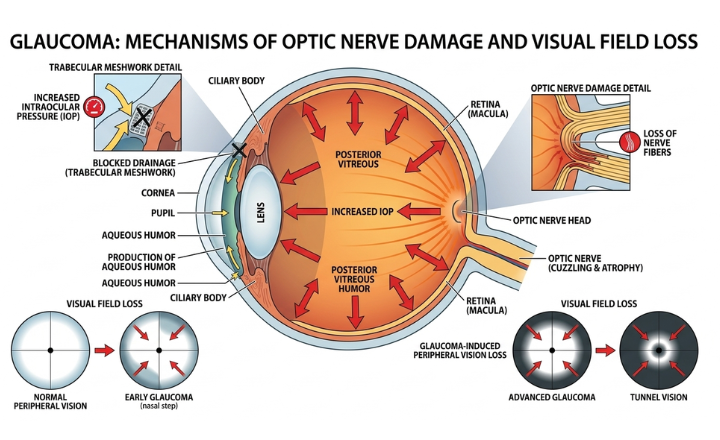
Glaucoma is a group of eye diseases that damage the optic nerve, usually due to increased pressure inside the eye.
1. What is glaucoma?
Glaucoma is a group of eye diseases that damage the optic nerve, usually due to increased pressure inside the eye. Often called the “silent thief of sight,” glaucoma progresses slowly and can lead to permanent vision loss if undetected. Many people do not notice early symptoms, which is why regular eye checkups are critical.
2. What are the types of glaucoma?
- ● Open-angle glaucoma: Most common type. Drainage channels in the eye slowly become blocked, increasing pressure. Usually painless and gradual.
- ● Angle-closure glaucoma: Less common, sudden rise in eye pressure. Causes severe pain, nausea, blurred vision — requires immediate medical attention.
- ● Normal-tension glaucoma: Optic nerve damage occurs even when eye pressure is normal. Regular monitoring is needed.
- ● Congenital glaucoma: Present at birth due to abnormal development of eye drainage channels.
3. What are the symptoms of glaucoma?
- ● Gradual loss of peripheral (side) vision
- ● Tunnel vision in advanced stages
- ● Eye pain or headache (angle-closure glaucoma)
- ● Blurred vision or halos around lights
- ● Nausea and vomiting (in acute cases)
Because early stages may show no symptoms, regular eye exams are essential, especially for people over 40 or with a family history of glaucoma.
4. How is glaucoma diagnosed?
Glaucoma is diagnosed through a combination of tests:
- ● Tonometry: Measures eye pressure
- ● Ophthalmoscopy: Examines the optic nerve
- ● Visual field test: Detects peripheral vision loss
- ● Optical coherence tomography (OCT): High-resolution imaging of optic nerve and retinal layers
Netram Eye Hospital, Nagpur uses advanced machines like the Zeiss Humphrey Field Analyzer 840 and Twinstar SLT Laser system for precise diagnosis and treatment planning.
5. How is glaucoma treated?
Treatment depends on type and severity:
- ● Medications: Eye drops to reduce eye pressure.
- ● Laser therapy (SLT / ALT): Improves drainage of eye fluid; minimally invasive and pain-free.
- ● Surgery: For severe cases, procedures like trabeculectomy create a new drainage channel.
At Netram Eye Hospital, Dr. Ashutosh Jaiswal, a gold medalist and internationally trained super-specialist, uses Twinstar SLT Laser, the first in Central India, providing safe and effective glaucoma management.
6. How to prevent glaucoma or slow progression?
- ● Get regular eye checkups, especially after age 40
- ● Maintain healthy blood pressure and sugar levels
- ● Protect eyes from head trauma
- ● Use prescribed eye drops consistently
- ● Avoid smoking and manage stress
Visit the Experts
Netram Eye Hospital, Nagpur
Address:
G6-10, Sai Krupa Apartment, Next to Chaudhari Hospital, Umred Road, Sakkardara, Nagpur – 440024
Phone:
+91 9859 804 804 / +91 9852 804 804
Website:
www.netramhospital.com