
Dry Eyes
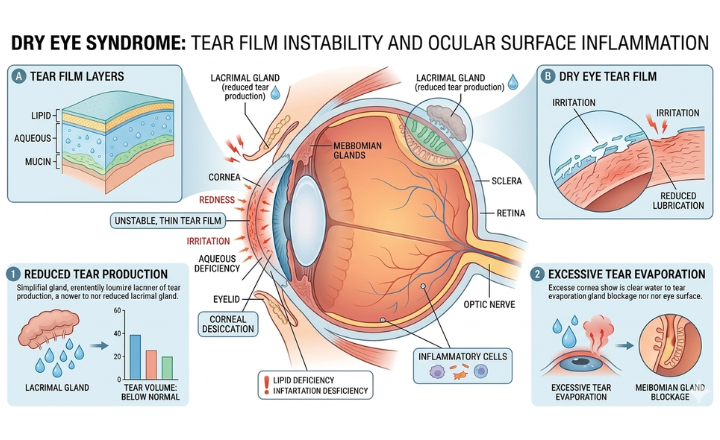
Dry eyes occur when the eyes do not produce enough tears or the tears evaporate too quickly.
1. What are dry eyes?
Dry eyes occur when the eyes do not produce enough tears or the tears evaporate too quickly. Tears are essential to lubricate the eye, provide nutrients, remove debris, and protect against infections. Without sufficient tears, the eyes become irritated, red, itchy, and can even cause blurred vision. Dry eye syndrome is very common, especially in people who spend long hours on computers, mobile devices, or in air-conditioned environments.
2. What causes dry eyes?
Dry eyes can be caused by multiple factors:
- ● Aging: Tear production decreases naturally with age
- ● Prolonged screen time: Reduced blinking leads to faster tear evaporation
- ● Environmental factors: Wind, dust, smoke, and air-conditioning
- ● Medical conditions: Diabetes, thyroid disorders, rheumatoid arthritis
- ● Medications: Antihistamines, antidepressants, and blood pressure medicines
- ● Contact lens wear: Can reduce tear stability and comfort
3. What are the symptoms of dry eyes?
- ● Burning or stinging sensation in the eyes
- ● Redness and irritation
- ● Sensitivity to light
- ● Feeling of a foreign body or sand in the eye
- ● Blurred vision that improves with blinking
- ● Watery eyes (reflex tearing due to irritation)
Symptoms may worsen during long screen use, in dry climates, or with aging.
4. How are dry eyes diagnosed?
A comprehensive eye examination includes:
- ● Schirmer test: Measures tear production
- ● Tear breakup time (TBUT): Assesses tear film stability
- ● Slit-lamp examination: Checks eyelids, cornea, and tear quality
- ● Meibomian gland assessment: Evaluates oil glands that prevent tear evaporation
Netram Eye Hospital, Nagpur uses advanced diagnostic equipment to determine the exact cause and severity of dry eye, ensuring precise treatment.
5. How is dry eye treated?
Treatment depends on severity:
- ● Artificial tears: Lubricating eye drops used regularly
- ● Lifestyle adjustments: Frequent breaks from screens, humidifiers, protective eyewear
- ● Prescription medications: Anti-inflammatory eye drops for moderate to severe cases
- ● Meibomian gland therapy: Warm compresses or in-office gland expression
- ● Special contact lenses: Scleral lenses to maintain moisture for severe dry eyes
At Netram Eye Hospital, treatments are personalized, combining advanced technology with expert care by Dr. Ashutosh Jaiswal, ensuring relief and long-term eye health.
6. How can dry eyes be prevented?
- ● Take frequent breaks from digital screens (20-20-20 rule)
- ● Blink consciously during work
- ● Use humidifiers in dry environments
- ● Wear sunglasses to protect from wind and UV rays
- ● Eat a diet rich in omega-3 fatty acids (fish, flaxseed)
- ● Stay hydrated
Visit the Experts
Netram Eye Hospital, Nagpur
Address:
G6-10, Sai Krupa Apartment, Next to Chaudhari Hospital, Umred Road, Sakkardara, Nagpur – 440024
Phone:
+91 9859 804 804 / +91 9852 804 804
Website:
www.netramhospital.com