
Conjunctivitis
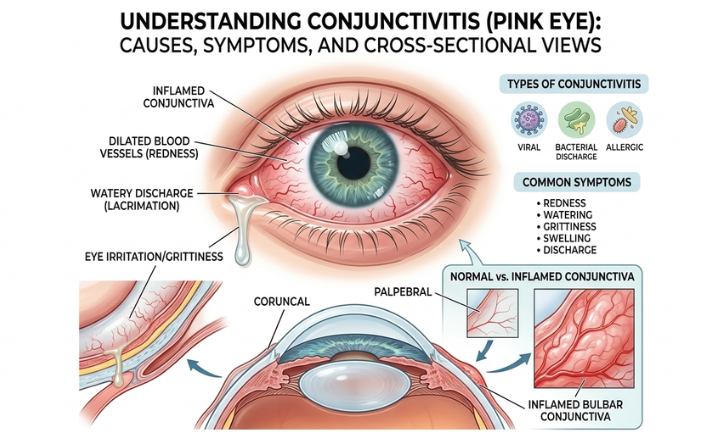
Conjunctivitis, commonly known as “pink eye,” is an inflammation or infection of the conjunctiva — the thin, transparent layer covering the white part of the eye and inner eyelids.
1. What is conjunctivitis?
Conjunctivitis, commonly known as “pink eye,” is an inflammation or infection of the conjunctiva — the thin, transparent layer covering the white part of the eye and inner eyelids. It causes redness, irritation, watering, and sometimes discharge. Conjunctivitis can be viral, bacterial, or allergic in nature. It is highly contagious in viral and bacterial forms, especially in children and workplaces, making early diagnosis and treatment essential.
2. What causes conjunctivitis?
- ● Viral: Most common type; caused by adenoviruses. Usually spreads through hand-to-eye contact.
- ● Bacterial: Caused by bacteria such as Staphylococcus or Streptococcus; produces thick yellow/green discharge.
- ● Allergic: Triggered by pollen, dust, or pet dander; usually affects both eyes and causes itching.
- ● Irritant-related: Smoke, chlorine in swimming pools, chemical exposure, or contact lens misuse.
3. What are the symptoms of conjunctivitis?
- ● Red or pink coloration of the eye
- ● Itching and burning sensation
- ● Excessive tearing or watery eyes
- ● Discharge that may stick eyelids together
- ● Swollen eyelids
- ● Sensitivity to light
Symptoms can vary depending on the cause: viral conjunctivitis often starts in one eye and spreads to the other, bacterial causes usually have thicker discharge, while allergic conjunctivitis is accompanied by intense itching.
4. How is conjunctivitis diagnosed?
Diagnosis involves:
- ● Clinical examination: Ophthalmologist observes redness, discharge, and eyelid swelling
- ● Eye swab or culture (if bacterial): Identifies the bacteria for targeted treatment
- ● Allergy testing (if allergic conjunctivitis): Determines triggers
- ● History assessment: Exposure to irritants, contact lens usage, or sick contacts
Netram Eye Hospital, Nagpur uses modern diagnostic equipment to accurately determine the type and severity of conjunctivitis and to provide appropriate treatment.
5. How is conjunctivitis treated?
Treatment depends on the type:
- ● Viral: Usually self-limiting; artificial tears and cold compresses for relief
- ● Bacterial: Antibiotic eye drops or ointments prescribed
- ● Allergic: Anti-allergy eye drops and avoiding triggers
- ● Irritant-related: Flush eyes with saline and avoid the irritant
Netram Eye Hospital ensures proper treatment, hygiene instructions, and follow-up to prevent complications and reduce spread. Children, adults, and contact lens users receive personalized care under Dr. Ashutosh Jaiswal, ensuring safe and effective management.
6. How to prevent conjunctivitis?
- ● Wash hands frequently and avoid touching eyes
- ● Do not share towels, pillows, or makeup
- ● Clean contact lenses properly and follow replacement schedule
- ● Avoid swimming in contaminated water
- ● Wear protective eyewear in dusty or chemical environments
Visit the Experts
Netram Eye Hospital, Nagpur
Address:
G6-10, Sai Krupa Apartment, Next to Chaudhari Hospital, Umred Road, Sakkardara, Nagpur – 440024
Phone:
+91 9859 804 804 / +91 9852 804 804
Website:
www.netramhospital.com