
Squint / Strabismus
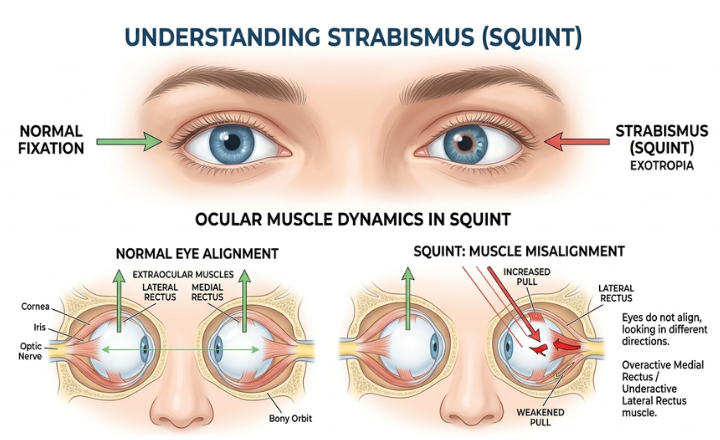
Squint, also known as strabismus, is a condition where the eyes do not align properly and point in different directions.
1. What is squint (strabismus)?
Squint, also known as strabismus, is a condition where the eyes do not align properly and point in different directions. One eye may look straight while the other turns inward, outward, upward, or downward. It can affect one or both eyes and may be constant or intermittent. Squint is common in children but can also develop in adults due to trauma, neurological problems, or eye muscle disorders.
2. What are the causes of squint?
- ● Congenital factors: Present from birth due to weak or imbalanced eye muscles
- ● Refractive errors: Uncorrected hypermetropia or myopia may cause squint
- ● Eye muscle disorders: Muscle paralysis or imbalance
- ● Neurological disorders: Brain or nerve problems affecting eye movement
- ● Trauma or injury: Damage to eye muscles or nerves
- ● Medical conditions: Diabetes or thyroid disorders can contribute
Early diagnosis and treatment are essential to prevent long-term vision problems such as amblyopia (lazy eye).
3. What are the symptoms of squint?
- ● Misaligned eyes visible to the naked eye
- ● Double vision (diplopia) in adults
- ● Tilting or turning the head to see clearly
- ● Eye strain or headaches
- ● Difficulty judging depth or distance
- ● Poor vision in one eye (lazy eye / amblyopia) if untreated in children
4. How is squint diagnosed?
Diagnosis involves a thorough eye examination:
- ● Visual acuity test to assess vision in both eyes
- ● Cover-uncover test to detect eye deviation
- ● Refraction assessment to correct underlying vision problems
- ● Ocular motility test to examine eye muscle function
- ● Fundus examination and corneal reflex testing
Netram Eye Hospital, Nagpur uses advanced tools for precise evaluation and planning of treatment, including pediatric strabismus evaluation and digital eye tracking.
5. How is squint treated?
Treatment depends on age, severity, and type:
- ● Glasses: Correct refractive errors contributing to squint
- ● Eye exercises / patching therapy: For mild cases or lazy eye
- ● Medications: Rarely used for specific neurological causes
- ● Surgery: Corrects misaligned eye muscles, often done under general anesthesia for children
At Netram Eye Hospital, Dr. Ashutosh Jaiswal specializes in pediatric and adult squint surgeries, ensuring precise alignment and improved vision outcomes using modern microsurgical techniques.
6. Can squint be prevented?
- ● Early eye checkups for children
- ● Correct refractive errors promptly
- ● Monitor vision development during childhood
- ● Treat eye infections or neurological conditions immediately
Early detection and intervention improve vision outcomes and prevent amblyopia.
Visit the Experts
Netram Eye Hospital, Nagpur
Address:
G6-10, Sai Krupa Apartment, Next to Chaudhari Hospital, Umred Road, Sakkardara, Nagpur – 440024
Phone:
+91 9859 804 804 / +91 9852 804 804
Website:
www.netramhospital.com