
Cataract Complications & Secondary Cataract
A cataract is the clouding of the natural lens in the eye, causing blurry vision, glare, and difficulty seeing at night.
1. What is a cataract and what are its complications?
A cataract is the clouding of the natural lens in the eye, causing blurry vision, glare, and difficulty seeing at night. While modern cataract surgery is safe and effective, complications can occasionally occur. These complications may include infection, inflammation, lens dislocation, retinal detachment, or the development of secondary cataract (posterior capsule opacification) after surgery.
2. What is secondary cataract?
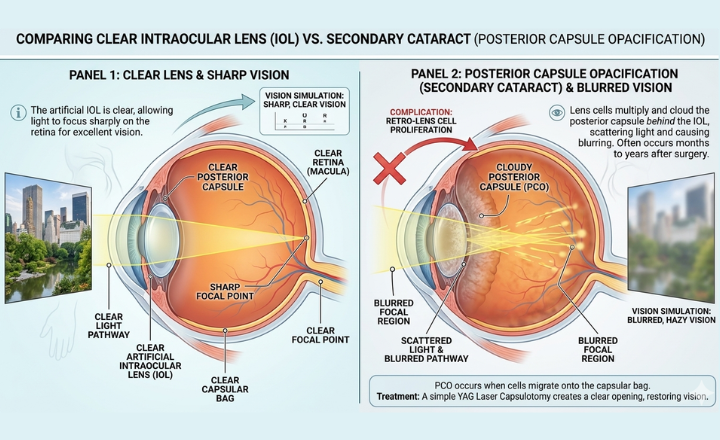
Secondary cataract, also called posterior capsule opacification (PCO), occurs when the thin membrane (capsule) supporting the artificial lens becomes cloudy after cataract surgery. This can happen months or years after the procedure. It causes a gradual decrease in vision similar to the original cataract, including blurred vision, glare, and difficulty reading.
3. What are the symptoms of cataract complications?
- ● Blurred or hazy vision
- ● Glare or halos around lights, especially at night
- ● Difficulty seeing fine details
- ● Eye redness or discomfort (if inflammation or infection occurs)
- ● Floaters or flashes (in rare cases of retinal complications)
If symptoms appear after cataract surgery, prompt evaluation is essential to prevent permanent vision loss.
4. How are cataract complications diagnosed?
- ● Comprehensive eye exam: Visual acuity and slit-lamp examination
- ● Fundus examination: Checks retina and optic nerve
- ● Ocular coherence tomography (OCT): Detects subtle retinal or lens capsule issues
- ● Intraocular pressure measurement: Ensures no secondary glaucoma
Netram Eye Hospital, Nagpur uses advanced diagnostic equipment to detect early signs of complications and plan precise intervention.
5. How are cataract complications treated?
- ● Secondary cataract (PCO): Treated with YAG laser capsulotomy, a painless outpatient procedure that restores clear vision within minutes.
- ● Inflammation: Anti-inflammatory eye drops or medications
- ● Infection: Prompt antibiotic treatment
- ● Lens dislocation: Surgical repositioning if necessary
- ● Retinal complications: Managed with retinal laser or surgery
Netram Eye Hospital ensures safe and precise management of cataract complications using Oertli Switzerland Phacoemulsification Machine, YAG laser, and advanced retinal care equipment, under the supervision of Dr. Ashutosh Jaiswal.
6. How can cataract complications be prevented?
- ● Regular follow-up after cataract surgery
- ● Immediate attention for any unusual redness, pain, or vision changes
- ● Adherence to prescribed eye drops and hygiene instructions
- ● Annual eye checkups to monitor lens and retinal health
Visit the Experts
Netram Eye Hospital, Nagpur
Address:
G6-10, Sai Krupa Apartment, Next to Chaudhari Hospital, Umred Road, Sakkardara, Nagpur – 440024
Phone:
+91 9859 804 804 / +91 9852 804 804
Website:
www.netramhospital.com