
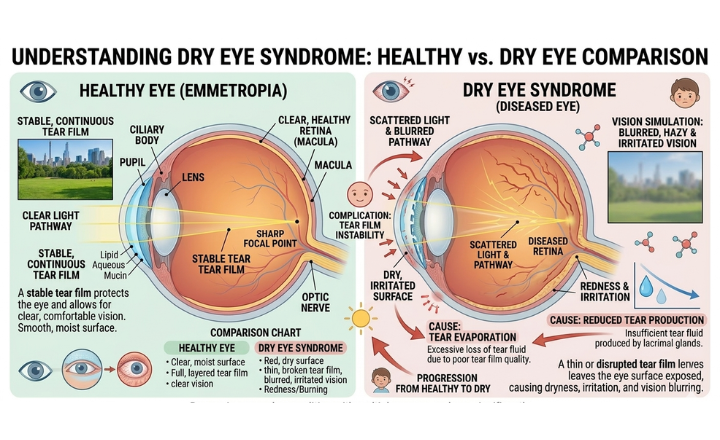
Dry Eye Syndrome
1. What is dry eye syndrome?
Dry Eye Syndrome (DES) occurs when your eyes do not produce enough tears or the tears evaporate too quickly, leading to dryness, irritation, and discomfort. It is a common condition that affects people of all ages, but is more prevalent in older adults, contact lens users, and individuals working long hours on screens.
2. What causes dry eye syndrome?
- ● Aging: Tear production decreases with age
- ● Environmental factors: Dust, wind, air conditioning, low humidity
- ● Excessive screen use: Reduced blinking while using computers or smartphones
- ● Hormonal changes: Especially in postmenopausal women
- ● Medical conditions: Diabetes, thyroid disorders, autoimmune diseases like Sjogren’s syndrome
- ● Medications: Antihistamines, antidepressants, and blood pressure medicines
- ● Contact lenses: Prolonged use can reduce tear stability
3. What are the symptoms?
- ● Dry, itchy, or burning sensation in eyes
- ● Redness or irritation
- ● Sensitivity to light
- ● Blurred vision, especially after prolonged screen use
- ● Excessive tearing (reflex tearing due to dryness)
- ● Feeling of a foreign body or grittiness in the eye
Chronic dry eyes can damage the cornea and affect vision if left untreated.
4. How is dry eye diagnosed?
- ● Comprehensive eye examination: Checks overall ocular health
- ● Tear film evaluation: Schirmer test to measure tear production
- ● Tear breakup time (TBUT): Assesses tear stability
- ● Staining tests: Fluorescein or lissamine green stains detect corneal damage
- ● Meibomian gland evaluation: For lipid deficiency contributing to evaporative dry eye
Netram Eye Hospital, Nagpur uses advanced tear film analysis and corneal imaging to diagnose dry eye accurately and recommend personalized treatment.
5. How is dry eye treated?
Treatment depends on severity and cause:
- ● Artificial tears or lubricating eye drops for mild cases
- ● Prescription eye drops: Anti-inflammatory or cyclosporine drops
- ● Punctal plugs: Reduce tear drainage and retain moisture
- ● Meibomian gland therapy: For evaporative dry eye
- ● Lifestyle modifications: Reduce screen time, use humidifiers, protective eyewear
- ● Nutritional supplements: Omega-3 fatty acids for tear quality
Dr. Ashutosh Jaiswal at Netram Eye Hospital provides advanced dry eye management, combining medical therapy, procedural treatments, and lifestyle guidance for long-term relief and eye comfort.
6. How can dry eye be prevented or managed?
- ● Take regular breaks from screens and blink frequently
- ● Use humidifiers in dry environments
- ● Wear protective eyewear outdoors
- ● Stay hydrated and maintain a healthy diet
- ● Regular eye checkups to monitor tear film health
Visit the Experts
Netram Eye Hospital, Nagpur
Address:
G6-10, Sai Krupa Apartment, Next to Chaudhari Hospital, Umred Road, Sakkardara, Nagpur – 440024
Phone:
+91 9859 804 804 / +91 9852 804 804
Website:
www.netramhospital.com