
Intra-vitreal Injections
1. What are Intra-vitreal Injections?
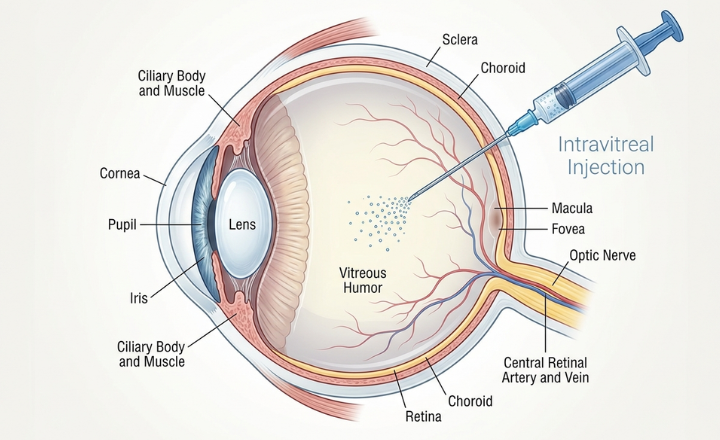
Intra-vitreal injections are medications injected directly into the vitreous cavity of the eye, the gel-like substance at the back of the eye. These injections are commonly used to treat retinal diseases, macular edema, diabetic retinopathy, age-related macular degeneration (AMD), and retinal vein occlusion.
2. Why are they necessary?
Many retinal conditions cannot be effectively treated with oral medications or eye drops because drugs need to reach the back of the eye. Intra-vitreal injections deliver medicine directly to the site of disease, improving vision outcomes and preventing further vision loss.
3. What conditions are treated with Intra-vitreal Injections?
- ● Diabetic Retinopathy and Diabetic Macular Edema
- ● Age-related Macular Degeneration (AMD) – wet type
- ● Retinal Vein Occlusion (RVO)
- ● Uveitis or intraocular inflammation
- ● Macular edema from other causes
4. How is the procedure performed?
- ● Done under local anesthesia (numbing drops)
- ● The eye is cleaned with antiseptic solution to prevent infection
- ● A fine needle injects medicine into the vitreous cavity
- ● Eye pressure and eye health are checked immediately after the injection
- ● Procedure usually takes 5–10 minutes
5. What medications are commonly used?
- ● Anti-VEGF drugs (e.g., Ranibizumab, Bevacizumab, Aflibercept) to reduce abnormal blood vessels
- ● Steroids (e.g., Triamcinolone) to reduce inflammation and swelling
6. Are Intra-vitreal Injections safe?
- ● Generally very safe when performed by an experienced retinal specialist
- ● Risks include infection (endophthalmitis), bleeding, increased eye pressure, or retinal detachment, but these are rare
- ● Proper sterile technique and follow-up reduce risks significantly
7. What is the recovery time?
- ● Most patients can resume normal activities immediately, but avoid rubbing the eye
- ● Vision may be blurred for a few hours post-injection
- ● Follow-up visits are essential to monitor response and plan repeat injections if necessary
8. Why choose Netram Eye Hospital, Nagpur?
- ● Dr. Ashutosh Jaiswal, gold-medalist retinal and vitreoretinal specialist, performs all injections
- ● Advanced diagnostic imaging (OCT, fundus photography) ensures precise treatment
- ● Sterile, state-of-the-art operation theater for safe and effective injection
- ● Personalized treatment plan with regular follow-up and monitoring
Visit the Experts
Netram Eye Hospital, Nagpur
Address:
G6-10, Sai Krupa Apartment, Next to Chaudhari Hospital, Umred Road, Sakkardara, Nagpur – 440024
Phone:
+91 9859 804 804 / +91 9852 804 804
Website:
www.netramhospital.com